
Melasma vs Sun Spots vs Freckles: What’s the Difference?
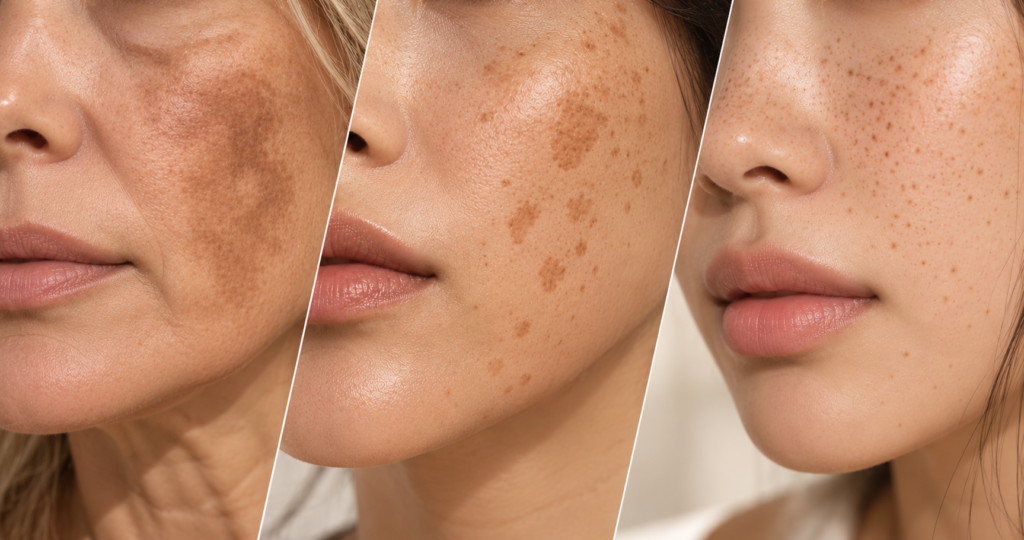
Have you ever noticed brown spots or uneven patches appearing on your face and wondered what they actually are?
Not all pigmentation is the same. Melasma, sun spots and freckles may look similar at first glance, but they have different causes, characteristics and treatment considerations.
Understanding these differences is an important first step towards choosing the right skincare and professional treatment options.
At Ccoco Beauty Balwyn, we believe that effective pigmentation management begins with understanding your skin.
1. Melasma: Hormone-Related Pigmentation
Melasma is a common pigmentation condition that typically appears as larger, symmetrical brown or grey-brown patches.
It often develops on the cheeks, forehead, upper lip and other sun-exposed areas of the face.
What Causes Melasma?
Melasma is associated with several factors:
- Hormonal changes, including pregnancy
- Genetic predisposition
- UV radiation and visible light exposure
- Certain hormonal medications
Unlike some other pigmentation concerns, melasma can be persistent and prone to recurrence.
Can Melasma Be Treated?
Melasma usually requires a careful, long-term management approach.
Treatment may involve appropriate skincare, sun protection and prescription topical products recommended by a medical practitioner.
Laser treatments are not always the first choice, as excessive heat or inflammation may worsen pigmentation in some individuals.
The key is careful management rather than aggressive treatment.
2. Sun Spots: Pigmentation Caused by UV Exposure
Sun spots, medically known as solar lentigines, are commonly associated with cumulative sun exposure.
They often appear as individual, flat brown spots with relatively defined borders.
Where Do Sun Spots Usually Appear?
Sun spots commonly develop on areas frequently exposed to sunlight, including:
- Face and cheeks
- Forehead
- Hands
- Neck and décolletage
Living in Melbourne means experiencing changing weather conditions, but UV exposure can still affect your skin even on cooler days.
Can Sun Spots Be Treated?
Some appropriately assessed sun spots may respond to targeted laser or light-based treatments.
These technologies may help reduce the appearance of selected benign pigmented lesions by targeting pigment within the skin.
However, not every brown spot is caused by sun damage. New, changing or suspicious lesions should be medically assessed before cosmetic treatment.
3. Freckles: Small Spots Influenced by Genetics
Freckles are small, flat pigmented spots that commonly appear on the nose, cheeks and other sun-exposed areas.
They are particularly common in people with lighter skin tones and a genetic predisposition.
What Makes Freckles Different?
Unlike sun spots, freckles often:
- Appear during childhood
- Become darker with sun exposure
- Fade during periods of reduced UV exposure
- Occur in clusters of small spots
Freckles are generally harmless and do not necessarily require treatment.
For those who prefer a more even-looking complexion, professional options may be discussed following an appropriate skin assessment.
Melasma vs Sun Spots vs Freckles: Key Differences
Although these conditions may appear similar, several characteristics can help distinguish them.
| Feature | Melasma | Sun Spots | Freckles |
| Appearance | Larger, symmetrical patches | Individual, defined brown spots | Small, scattered spots |
| Main factors | Hormones, UV, genetics | Cumulative UV exposure | Genetics and UV exposure |
| Typical onset | Often adulthood | More common with age | Often childhood |
| Sun sensitivity | Can worsen with exposure | Linked to accumulated exposure | Often darken in sunlight |
| Treatment approach | Long-term management | Selected targeted treatments | Often no treatment needed |
Important: Appearance alone cannot reliably confirm the type of pigmentation. A professional assessment may be necessary.
Which Pigmentation Treatment Is Right for You?
If you’re considering pigmentation treatment in Balwyn, identifying the type of pigmentation is essential before choosing a treatment.
Some pigmentation concerns may be suitable for laser toning or targeted laser treatments, while others may benefit more from topical skincare and ongoing sun protection.
At Ccoco Beauty Balwyn, our available technologies include Fotona StarWalker, which may be considered for selected pigment-related concerns following an appropriate assessment.
Treatment suitability depends on your skin type, pigmentation condition and medical history.
Can You Prevent Pigmentation from Getting Worse?
While not all pigmentation can be prevented, daily sun protection can help reduce UV-related darkening.
The Cancer Council Australia recommends appropriate sun protection when UV levels are 3 or above.
Helpful habits include using broad-spectrum SPF 50+ sunscreen, seeking shade and wearing protective clothing.
For melasma, tinted sunscreen containing iron oxides may offer additional protection against visible light.
Frequently Asked Questions
Is melasma the same as sun spots?
No. Melasma is influenced by hormonal, genetic and environmental factors, while sun spots are primarily associated with cumulative UV exposure.
Can freckles turn into melasma?
Freckles do not turn into melasma. They are different pigmentation conditions, although someone can have both.
Can laser treatment remove all pigmentation?
No single laser treatment is suitable for every pigmentation condition. Results vary, and some types, particularly melasma, may worsen with inappropriate treatment.
Understand Your Skin at Ccoco Beauty Balwyn
Whether you’re concerned about melasma, sun spots, freckles or uneven skin tone, understanding the cause is the first step towards choosing an appropriate approach.
At Ccoco Beauty Balwyn, we offer personalised skin consultations to help you explore suitable treatment options.
Book your complimentary in-clinic skin consultation.
Ccoco Beauty Balwyn
266 Doncaster Road, Balwyn North VIC 3104
Phone: 0451 819 343
Disclaimer: This article provides general educational information and does not constitute medical advice. Pigmented lesions should be appropriately assessed before cosmetic treatment. Treatment suitability and results vary between individuals.